2 Ways to Train Your Service Dog Without a Professional Trainer | Step By Step

A properly trained service dog is a real asset to a person with a disability. Service dogs accompany their handler everywhere, including in public places that are usually off limits to dogs, such as shops, libraries, museums, theaters, hospitals, and cinemas. Unfortunately, because service dogs are so helpful and important, there can be a long waiting list for such dogs. If you need a service dog and can't wait for one any longer, you might want to look into training a service dog yourself.
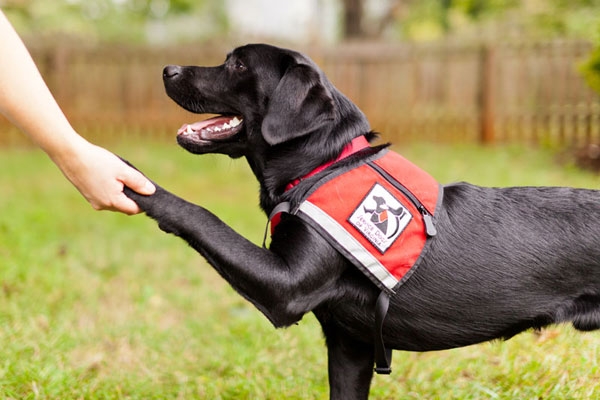
Method 01: Training Your Service Dog
Neuter or spay your dog, if it has not been done already. All service dogs are neutered. This is because females can't work while in heat (you will be followed by a pack of dogs wanting to mate her) and males are more easily distracted by territorial issues. Also neutered dogs tend to be less aggressive, which is important for a service dog.
Teach your dog basic command skills. A service dog has to be able to sit, stay, lie down, and come on cue. The dog also needs to walk next to the handler in a controlled manner all the time. This is so that you have control over your dog at all times.
Teach the dog to be as well-behaved unleashed as leashed. The dog should have impeccable basic obedience both when the lead is on and not on.
Teach your dog not to greet other people. The service dog has to be focused on you, and not on anyone else. This step is vitally important because you may need instant help, and if the dog is running around to other people to greet them, the dog can miss your need for immediate help.
Teach your dog when he is off duty. Under some circumstances, it's OK for your service dog to go and play. Teach your dog a cue that signals it's off duty.
Teach your dog specialized skills. The specific tasks you might want to teach the dog will depend on your disability. If you are profoundly deaf, then teaching a dog to alert you to the doorbell ringing, a phone going off, or a smoke detector alarm are all useful ideas. Likewise, if you have mobility issues, you might want the dog to retrieve small household items for you, such as keys, a remote, or a phone.
Train public access with your dog. Good manners are crucial for people accepting your dog and looking forward to you or other service dog teams coming back.
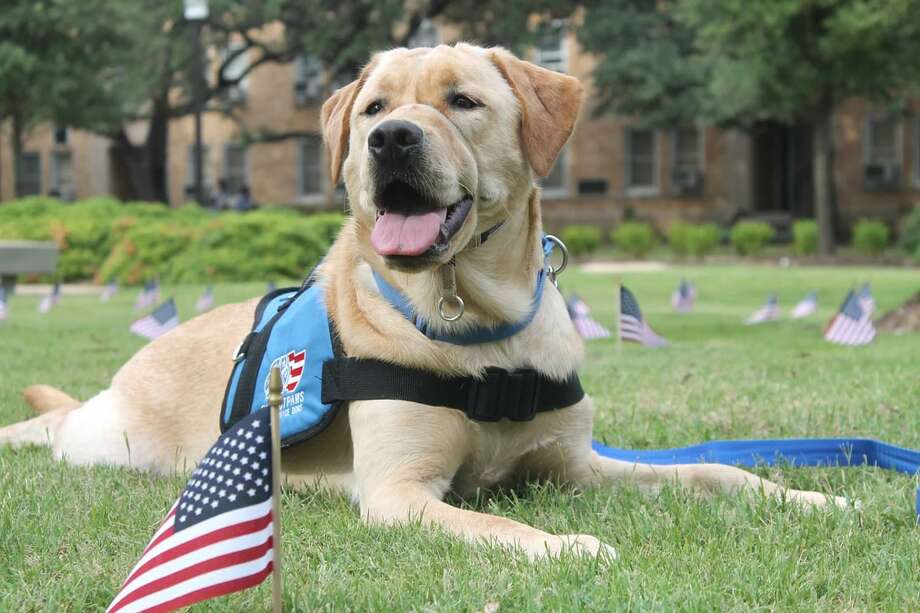
Method 02: Assessing a Potential Service Dog
Find a dog that is the right age. It can be difficult to know if a puppy under the age of 6 months has the right blend of intelligence and attention to make a good service dog. Charities that train service dogs, have a high 'drop out' rate, even when they have used their knowledge to select likely candidates.
Assess the health of the dog. Your service dog needs to be in good health in order to meet the requirements of the job. For example, if it has arthritis, and finds it difficult to move around, it is unfair to place the responsibility of responding to the doorbell on its shoulders. Also, some dogs with health conditions such as diabetes, have needs of their own and may not always be on top form to perform their service role.
Assess whether the dog is intelligent and eager to please. These are the hallmarks of a trainable dog and will make the task of training easier and more enjoyable. Look for a young dog that approaches you calmly but without fear. His or her body language should indicate confidence, such as an erect tail, wagging, walking directly to you (not slinking around the edges of the room), and keeping its head up (not lowered and cowed).
Find out from the owner how much training the dog has had. If its basic training is solid, ask the dog to sit and stay. Observe if it fidgets and looks around (easily distracted) or it keeps hits eyes on you (eager to please). Does he or she respond quickly or is it slow to react (not ideal in a service dog where quick reactions are needed).
Assess whether the dog is socialized and confident in a range of social situations. The dog needs to be confident in a range of situations and with all types of people. If it is anxious or fearful in certain situations this could place you in harms way. A fearful dog exhibits introverts body language such as cowering, averting his eyes, slinking in a submissive posture, holding his tail between his legs.
Determine whether the dog is docile and not overly protective. An aggressive, highly territorial or protective dog is unlikely to make a good service dog. You will spend more time trying to control the dog that he spends helping you.
Are You Dog Lovers?